Why I built an open source Markdown editor
I got tired of GitHub's write-preview tab dance, so I built MarkSight: a free, open source Markdown editor with live preview. Here's what open sourcing it taught me about community.
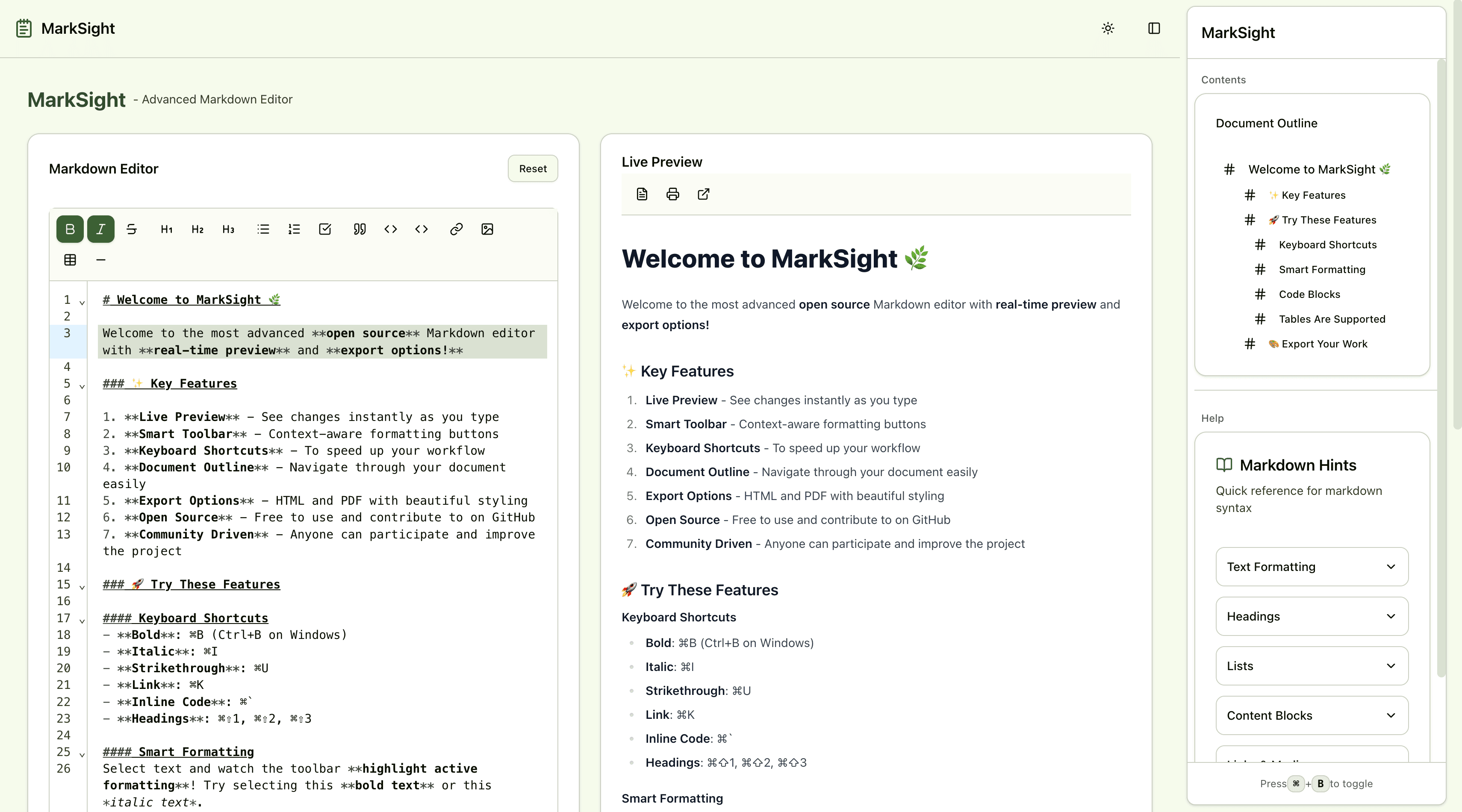
Every README I've ever written started the same way: type some Markdown into GitHub's editor, click Preview, spot something broken, click back to Write, fix it, click Preview again. Write, preview, write, preview. A tiny dance of friction I must have repeated a thousand times.
Tiny friction, repeated a thousand times, stops being tiny. So I did the most programmer thing possible: I built my own editor.
The editor I wanted to exist
MarkSight is a Markdown editor where the preview lives right next to your words. No tabs, no round trips, everything rendering live as you type. I built it with React, Next.js, TypeScript, and CodeMirror, and obsessed over making it feel snappy.
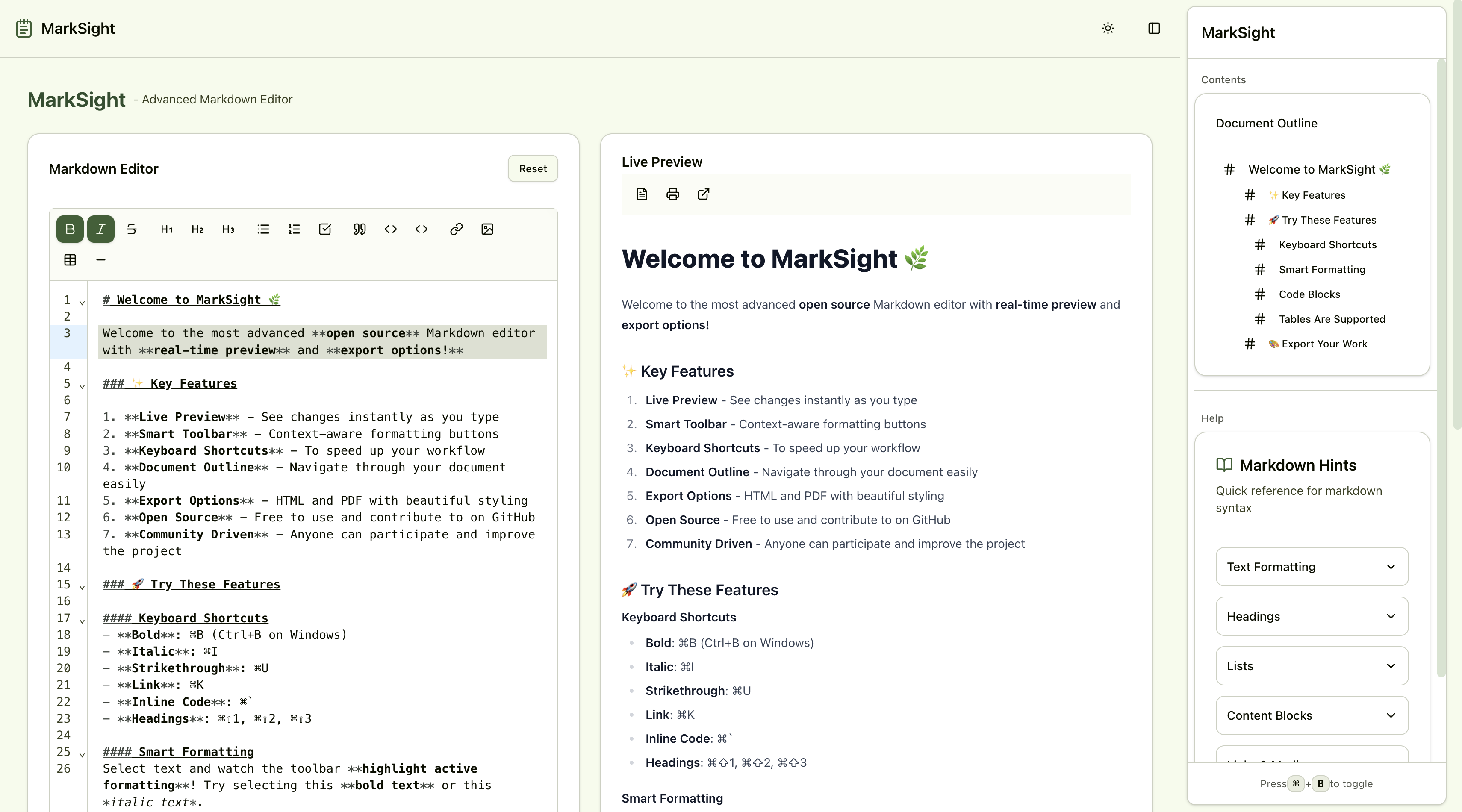
I could have kept it as a private little tool that solved a private little annoyance. Instead, I made the repository public, free for anyone to use, fork, break, and improve. That decision turned out to matter more than any feature I shipped.
The best part isn't the editor
Here's the thing nobody tells you about open sourcing a project: at some point, the code stops being the point. As I write this, MarkSight has four contributors. Me, plus three people I had never met before they opened their first pull request:
- Rinava (that's me!)
- HGB467
- Egoistian
- Lastmile04
(Dependabot also sends its regards.)
The stats are humble by internet standards (a handful of stars, a few forks), but every single one of them is a real person who found the project worth their click. And the first time a stranger opened a pull request, I just sat there smiling at my screen. Someone read my code, understood it, and spent their free time making it better. That feeling is hard to describe and very easy to get addicted to.
I've always loved keeping a door open
This isn't my first time hosting something free for other people. Years ago I ran a Minecraft server so people could play with their friends, and anyone was welcome to join. I wasn't writing code for it, just keeping the lights on, but the instinct was the same: set up a space, leave the door open, and let people make it theirs.
Open source scratches that exact same itch, with one upgrade: on the Minecraft server, people built houses. On GitHub, they build the server with you.
Doing the unglamorous parts
What changed this time is that I finally set the project up right. A README that actually explains things. Issues people can pick up. Pull requests that get reviewed quickly instead of collecting dust. None of that is glamorous, but it's the difference between "code that happens to be public" and "a project people can join." Almost as soon as I did that work, people started showing up, and I'm so happy and grateful they did.
What's next
Open source is also shaping what comes after MarkSight. I'm now thinking about opening up part of Kenda, the product I'm building with Sebastian Lujan as tech advisor. If MarkSight taught me anything, it's that the sooner you let people in, the better the thing becomes.
Your turn
If you've been thinking about open sourcing something (a tool, a config, that little script only you use), this is your sign. It's one of the best ways to give back to the community most of us learned from, and honestly, it feels amazing.
Open source is one of the best things in software, and the community around it is even better. Come see for yourself: try MarkSight or contribute on GitHub.