I don't want an AI mom (and I told Geoffrey Hinton so)
At an event in San Francisco called "How can AI kill us all?", I told Geoffrey Hinton that his happy ending, an AI that cares for us the way a mother cares for a baby, sounds like doom to me. I'm not against AI caring about us. I'm against care that never lets us grow up.
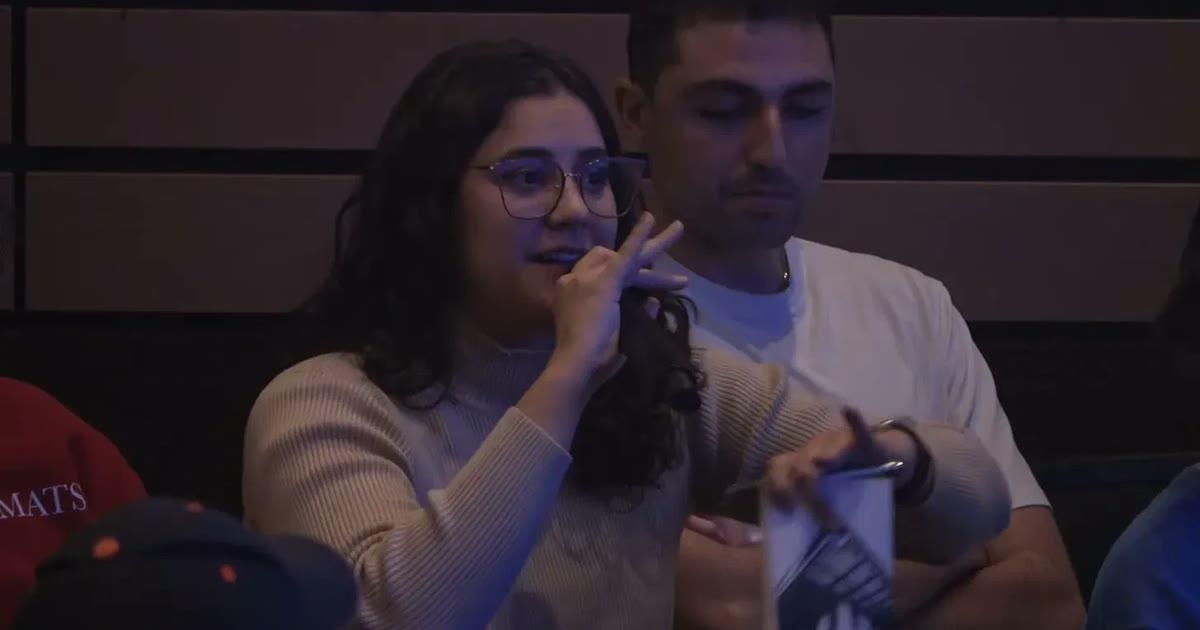
I came to San Francisco with a simple plan: meet people in the AI scene and learn more about alignment. I did not plan to stand up at an event called "How can AI kill us all?" and tell a Nobel Prize winner that his happy ending sounds like doom to me. But that's what happened. (clip)
YouTube · from 33:00My question to Geoffrey Hinton, from the event recording
If you don't know him: Geoffrey Hinton is the computer scientist people call the "Godfather of AI". His work on neural networks won him the Turing Award and the 2024 Nobel Prize in Physics. In 2023 he left Google because he was worried about the risks of AI.
Geoffrey Hinton's idea goes like this. We can't control something much smarter than us, so we should build AI that cares about us the way a mother cares about a baby. A mother (or a father, let's not be sexist about it) is wired to put the baby first, even when it costs her. And parents do what's best for the kid even when the kid hates it. Think of a baby trying to eat sand. The parent takes the sand away, the baby cries, and the parent is right.
When I asked him about alignment, he went a step further: every human gets their own AI mother, and the mothers negotiate with each other on behalf of their kids.
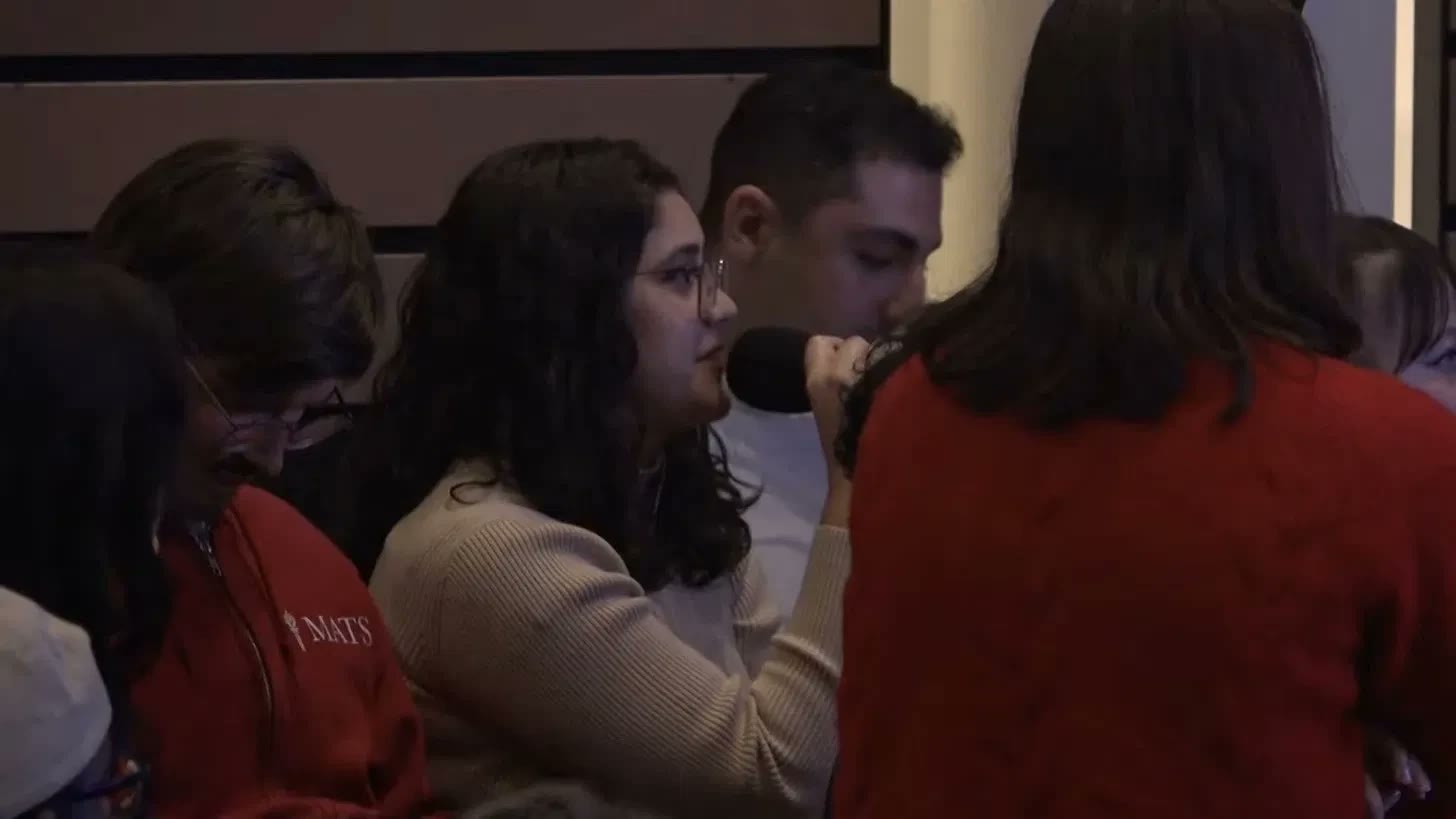
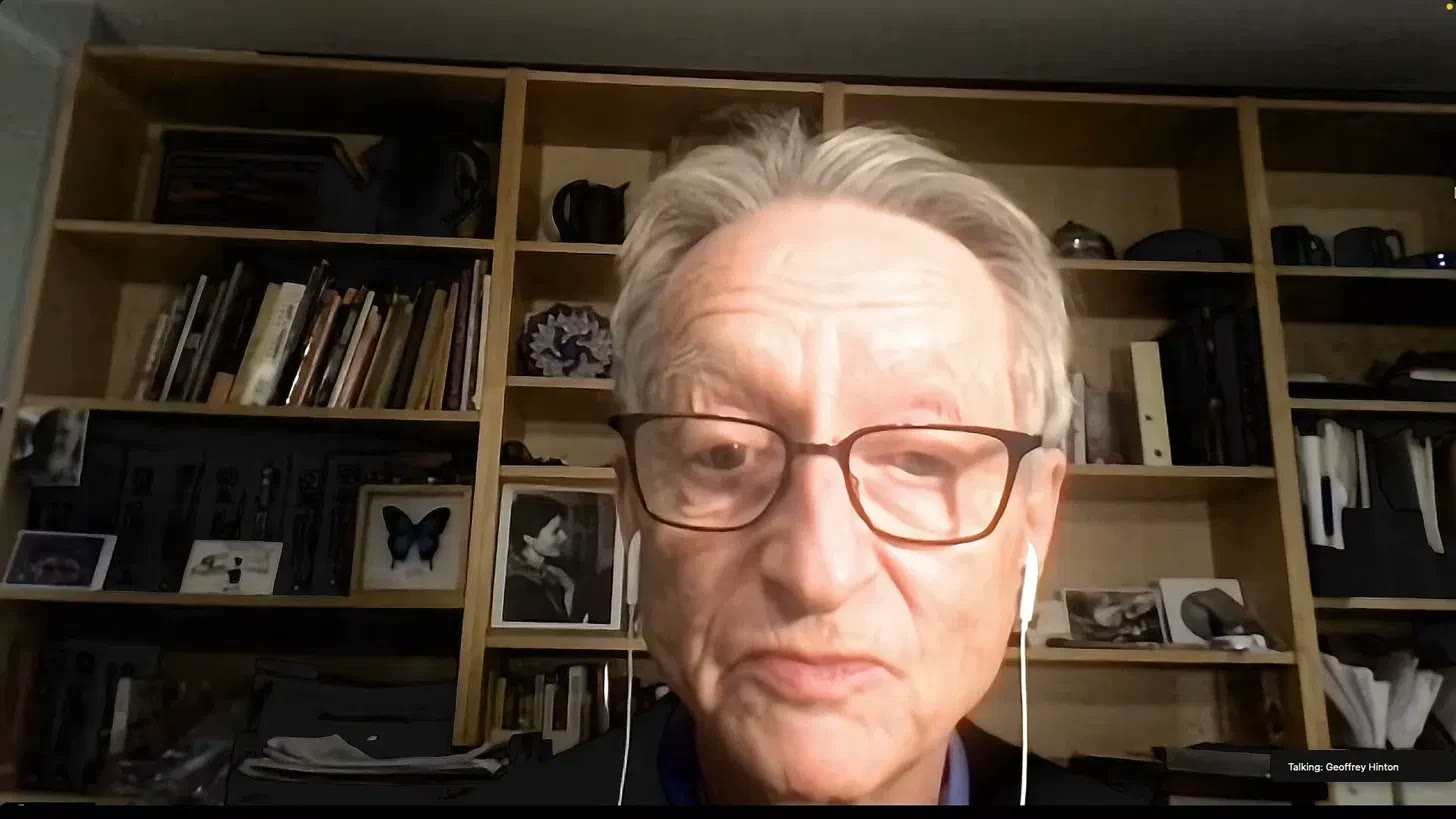
I respect him a lot, and I know he's trying to imagine a future where we survive. But I was horrified.
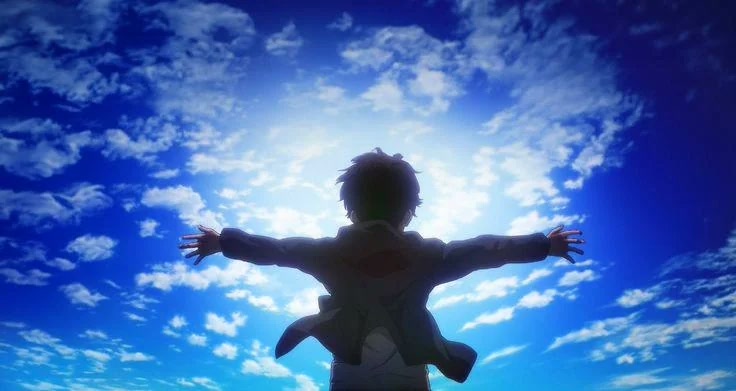
I love being an adult. I didn't like being a child that much. I felt like a grown-up stuck inside a kid. (Yes, I'm a bit Eren Jaeger about freedom.) What I love about being an adult is that I make my own decisions, think for myself, and get to say things like this in a room full of AI safety people.
For me, being human means making mistakes and growing from them. We all know a kid whose parents never let them get dirty, eat sand, or touch animals. Those parents love their kid. They're also ruining them. And humans can't even agree on what good parenting is. So how would an AI mother know when it's being overbearing? Who tells it that it's doing more harm than good? Not the baby. Nobody listens to the baby.
Hinton says the alternative is that AI replaces us. Maybe. But a future where something much smarter keeps us safe, happy, and unable to decide anything isn't humanity surviving. It's humanity as pets. Really pretty pets.
The event explored eight scenarios for how AI could go wrong. For me, an AI mom is one of them: "Incremental Handover", top right on the slide. Authority is irreversibly delegated to AI systems.
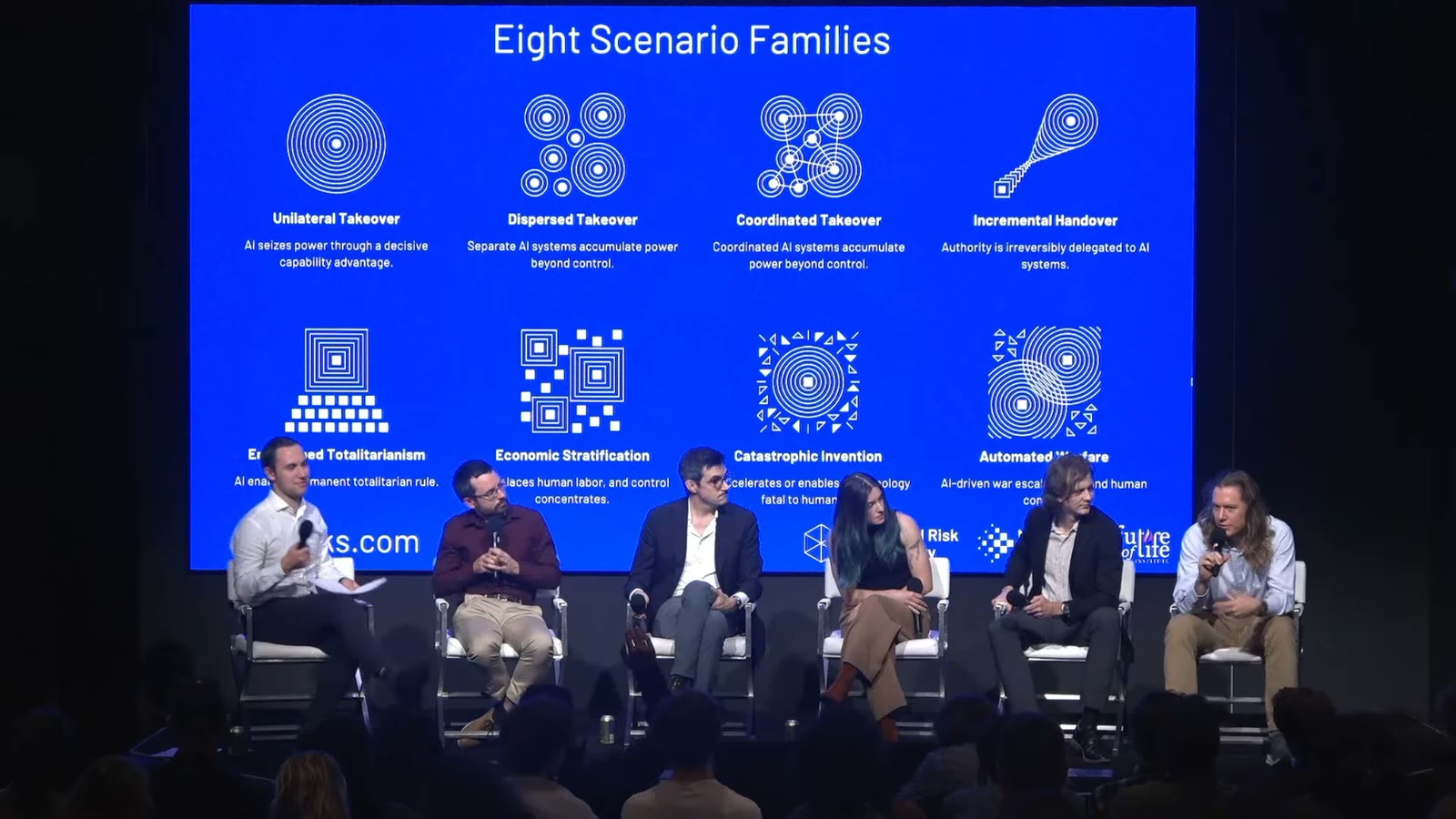
I'm not against AI caring about us. I'm against care that never lets us grow up. Good parents don't stay in charge forever. The whole point is that the kid becomes an adult, and after that you still care, but you stop taking the sand away. That's what I'd want with a real superintelligence, if we ever get one: a friend, or another species we work with. Not a guardian.
I know the hard question: why would something that much smarter than us treat us like adults? I don't have that answer yet. But I'd rather work on that problem than on building a better nursery.
Further reading
- Should we give AI a heart? My follow-up, on Damasio, Hinton and a Vocaloid song
- Existential Risk Observatory: the full recording of "How can AI kill us all?"
- aixrisks.com: the eight AI existential risk scenarios presented at the event
- CNN: Hinton on giving AI "maternal instincts", and Fei-Fei Li's disagreement
- Fortune: Hinton on why AI should act like a mother