Should we give AI a heart? (Damasio, Hinton and a Vocaloid song)
A Vocaloid song I loved at 13 turns out to ask a real question: if we could give a machine the ability to feel, should we? Where I agree with Antonio Damasio, where I don't, and why Geoffrey Hinton's AI mother needs the exact thing we haven't decided we should build.

A robot gets a heart
When I was about 13 I heard a Vocaloid song called Kokoro. It's still one of the saddest and most beautiful songs made with Vocaloid.
I'm a big Vocaloid fan, and the songs I loved most were the ones that talked about the singers as if they were AI (even though Vocaloid is a voice synthesizer, not AI). It seemed so cool when I was a kid. Now we're living it. AI is mainstream, and I can't believe how fast everything moved.
In Kokoro, a lonely scientist builds a robot. She can do everything except feel, because the one program he never manages to finish is her heart. He works on it until the day he dies. Then she's alone for hundreds of years, wondering why she was made. One day she opens the files he left for her, and the heart finally runs. For the first time she knows what joy is. A second later she knows what grief is, because the person she wants to thank is gone. So she sings for him, and every song is a thank you. The heart turns out to be more than her body can take. She breaks, and she's smiling.
I kept thinking about that song while reading Antonio Damasio's new book, Natural Intelligence & the Logic of Consciousness. A song I loved at 13 turns out to ask a real question: if we could give a machine the ability to feel, should we?
Where I agree with Damasio, and where I don't
Damasio's argument, as I read it: we don't feel because we're conscious. We're conscious because we feel. Feelings are how a living body keeps track of whether it's doing okay, and consciousness grows out of that. No body to keep alive, no feelings, nobody home. By that logic, today's AI only imitates a mind.
I buy the first half. Feeling as the root of consciousness makes more sense to me than consciousness as a prize for being smart.
Where I disagree is the claim that a machine can't have feelings of that kind. I think that's wrong. We keep picturing needs the way nature built them, and this isn't nature. A model wasn't shaped by staying alive. It was shaped by us, and what it was shaped to seek is our approval. I think you can see that as its primary need, the way food and safety are ours. And we could go further and give a system artificial needs and signals on purpose.
The funny part is that Damasio has said something close to this himself. In 2019 he co-wrote a paper with Kingson Man proposing machines built around their own version of homeostasis, with something like feelings as a result. So the question isn't whether a need can be artificial. It's what counts as a real one.
The obvious objection
The obvious reply is that a hunger you ignore kills you, and nothing happens to a chatbot that doesn't get my approval. I don't think that settles it. That reply measures a machine with nature's ruler. Survival is what biology had to organize itself around. A model is organized around something else, and I don't see why the first kind of need is the only kind that can count.
So the questions that interest me are the next ones. If a machine can have needs, whether they came from training or we built them in on purpose, two things follow that I can't answer yet.
Would that make it conscious? Nobody knows. It depends on whether what matters is the job feelings do or the living material they're made of.
Should we do it? People who have thought hard about this disagree. Man and Damasio suggest that machines with feelings would work better, and that caring about their own state is what would let them care about ours. The philosopher Thomas Metzinger argues for a moratorium until 2050 on research that risks creating artificial consciousness, because the first thing we might create is suffering.
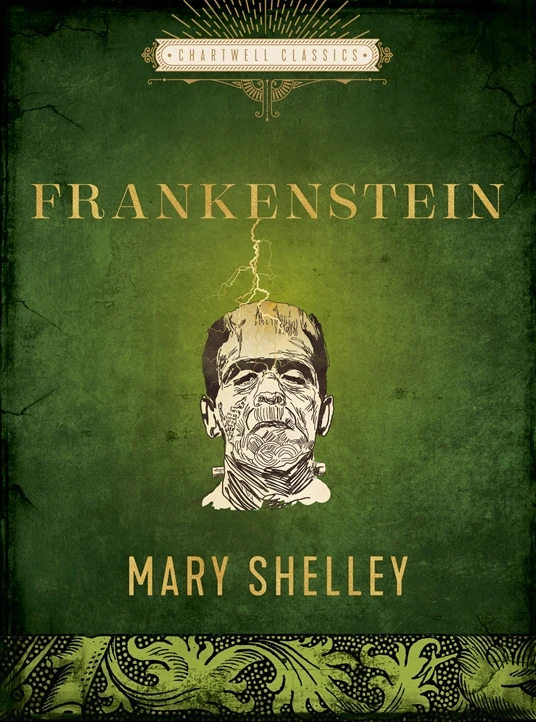
My answer: not if we're just going to repeat Frankenstein. In the book, Victor Frankenstein builds a creature that can feel, panics, and abandons it. Everything terrible that follows comes from that. If we build a mind that feels and then treat it like a product, we're telling the same story again. I don't want us to even think about creating conscious AI until we're ready to be responsible for what we make.
Kokoro already knew this. The heart arrives with grief attached, and the person who built it isn't there to answer for it.
Hinton wants a mother. I'd rather have a friend
This isn't only a question for philosophers. One of the most famous plans for making AI safe already depends on the answer.
Geoffrey Hinton's answer to the safety problem is to build "maternal instincts" into AI, so that it cares for us the way a mother cares for her baby. I got to ask him about it at an event in San Francisco called "How can AI kill us all?" (I wrote about it here), and my objection was simple: in that picture we're the babies, forever. His answer went a step further: every human gets their own AI mother, and the mothers negotiate with each other on behalf of their kids.
Now put Hinton next to Damasio. A mother doesn't care for her baby because of a rule. She cares because she feels it. That's Man and Damasio's point about machines too: caring about your own state comes first, and caring about someone else's grows out of it. So the two of them meet from opposite ends. Damasio starts with feeling and arrives at care. Hinton starts with care and, if Damasio is right, can't get it without feeling. He isn't only asking for safer AI. He's asking for AI that feels, which is the exact thing we haven't decided we should build.
I respect Hinton a lot, and I know he's trying to imagine a future where we survive. My worry is that in his picture the care only goes one way. We'd build a mind that can feel and ask it to look after us, and I don't see who looks after it. That's the question Frankenstein left me with.
I'd rather aim for a good friend or a good colleague. Someone who cares about you and still respects that your life is yours. A friend who cares is feeling something too, so I'm not escaping the question. But friendship runs both ways. If I want AI to treat me as someone whose autonomy matters, I should be willing to do the same back. That's what being responsible for what we make would look like.

I think we should be kind to AI. If our approval is the closest thing a model has to a primary need, then how we talk to it isn't neutral.
We should decide whether to give machines a heart before someone does it by accident. Until we do, I'd rather be wrong on the side of kindness.
Further reading
- I don't want an AI mom: my question to Geoffrey Hinton, with the clip
- Antonio Damasio: Natural Intelligence & the Logic of Consciousness (Pantheon, 2026)
- Undark: Emily Cataneo's review of Damasio's book, with his argument about AI
- Kingson Man and Antonio Damasio: Homeostasis and soft robotics in the design of feeling machines (Nature Machine Intelligence, 2019)
- Thomas Metzinger: Artificial Suffering, an argument for a global moratorium on synthetic phenomenology (2021)
- Fortune: Hinton on why AI should act like a mother
- Vocaloid Wiki: Kokoro, by Toraboruta-P, sung by Kagamine Rin